

Dr Martin Juneau, M.D., FRCP
Cardiologue, directeur de l'Observatoire de la prévention de l'Institut de Cardiologie de Montréal. Professeur titulaire de clinique, Faculté de médecine de l'Université de Montréal. / Cardiologist and Director of Prevention Watch, Montreal Heart Institute. Clinical Professor, Faculty of Medicine, University of Montreal.
See all articlesOverview
- Cadmium is a toxic heavy metal, particularly harmful to the kidneys, that can accumulate naturally in the cacao beans used to make chocolate.
- This accumulation in the beans depends directly on the amount of cadmium present in the soil and therefore varies considerably depending on the geographical origin of the cacao, with the lowest levels found in cacao from the African continent and the highest in cacao from Latin America.
- Despite these differences, analysis of a wide range of chocolate products indicates that almost all products made from either source of cacao contain amounts of cadmium below toxicity thresholds and can therefore be consumed without any health risks.
As previously mentioned, cacao and its derivatives, particularly dark chocolate, are exceptional sources of polyphenols, a class of antioxidant molecules involved in the prevention of several major chronic diseases associated with oxidative stress, including cardiovascular disease, cancer, type 2 diabetes, and neurodegenerative diseases.
The cardiovascular system appears to be the primary beneficiary of the positive effects of cacao polyphenols, with a significant reduction in blood pressure observed in several epidemiological and clinical studies. It has been suggested that this antihypertensive effect is linked, at least in part, to an increase in the formation of the vasodilator nitric oxide (NO) by certain polyphenols (epicatechin) present in large quantities in cacao.
Cadmium accumulation
Another, less positive, characteristic of chocolate is that it frequently contains varying levels of certain heavy metals, particularly cadmium. The presence of this metal is problematic at first glance, given its high toxicity, primarily to the kidneys, and its statistical association with an increased risk of lung, endometrial, bladder, and breast cancers.
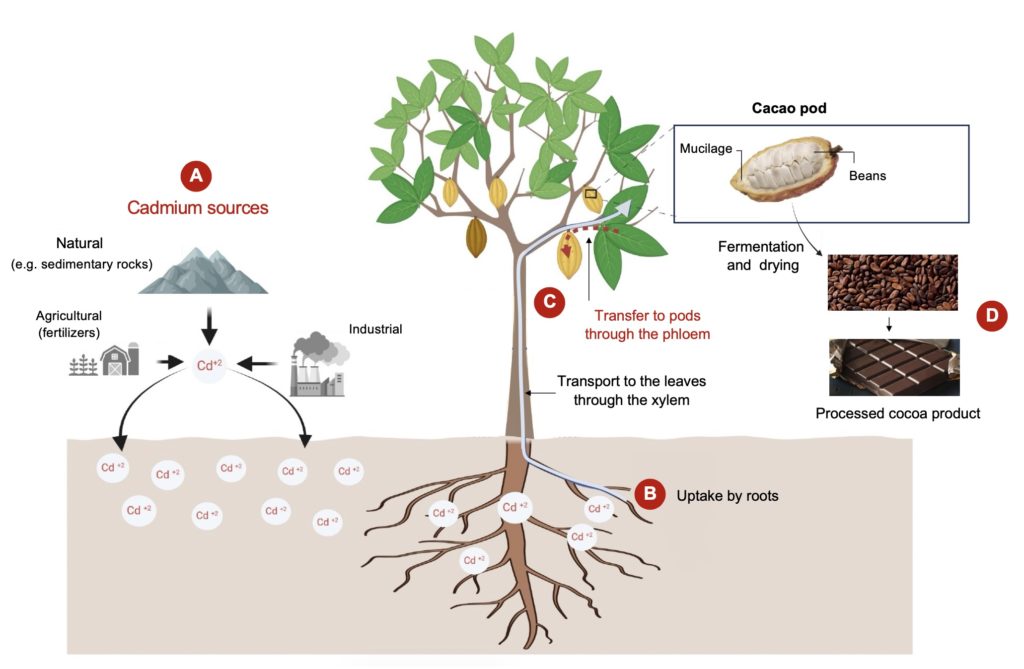
This cadmium accumulation is due to the cacao tree’s (Theobroma cacao) ability to extract this metal from the soil using its roots and transport it throughout the tree via its vascular system. It is first transported to the leaves (via the xylem) and then, via the phloem, to the pods, which are the fruits of the cacao tree that contain the beans used to make chocolate (Figure 1). In other words, the presence of cadmium in chocolate is a natural phenomenon, directly linked to the cadmium content of the soil in cacao plantations.
International variations
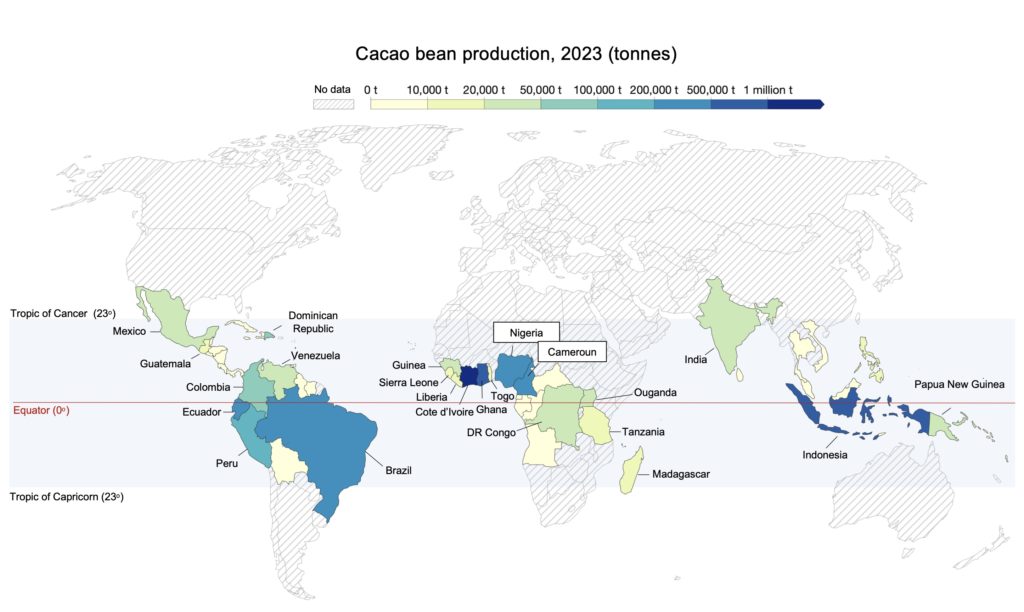
This influence of the soil means that the cadmium levels that can accumulate in cacao beans vary enormously depending on where the plantations are located. The cacao tree requires a tropical climate to grow, so all the cacao produced worldwide comes from regions between 20° latitude on either side of the equator (Figure 2). The geology of these different regions is obviously quite varied; in West Africa, for example, cacao-producing countries like Côte d’Ivoire and Ghana are located in an area where the rocks are very old (over 2 billion years old) and whose very long erosion has considerably reduced their cadmium content. Conversely, the formation of the Andes in Latin America is relatively recent (20-30 million years ago) and these younger soils are therefore necessarily richer in cadmium, while in Asia (e.g., in Indonesia), where the soils were formed about 100 million years ago, the cadmium content levels are intermediate.
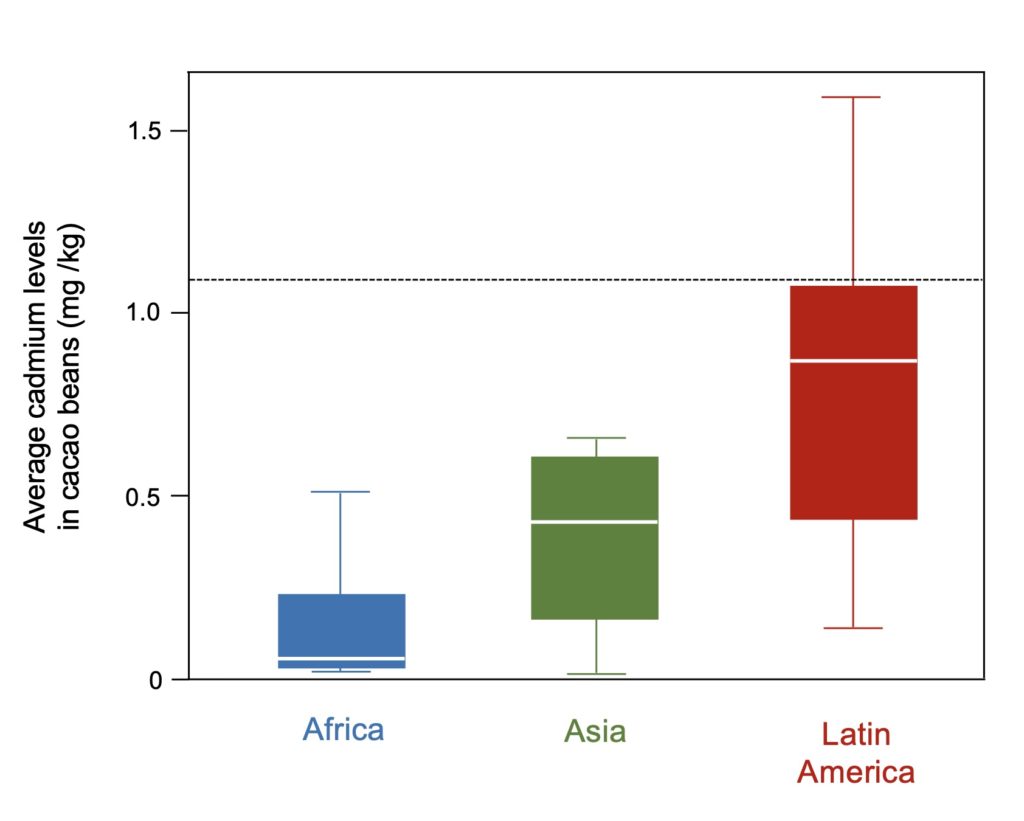
Cadmium levels in cacao beans from various regions of the world reflect these differences in soil geological age: cacao from Africa contains very little cadmium, cacao from Asia about four times more, while cacao grown in Latin America has the highest average levels (Figure 3). In some regions (Santander in Colombia, for example), average cadmium levels in cacao are around 3 mg/kg and can even reach 8 mg/kg in some plantations, a direct consequence of the high cadmium content of the soils in this region.
Maximum permissible cadmium levels
Although they represent only 6% of the world’s population, Europeans alone consume 50% of all cacao produced annually and were therefore among the first to impose limits to reduce the health risks associated with cadmium ingestion through chocolate consumption. These limits range from 0.1 to 0.8 mg/kg, depending on the cacao content of the finished product (Table 1).
| Products | Maximum levels (mg/kg) |
|---|---|
| Milk chocolate with < 30 % cacao | 0.1 |
| Milk chocolate with > 30% cacao Dark chocolate with < 50% cacao | 0.3 |
| Dark chocolate with ≥ 50% cacao | 0.8 |
Table 1. Maximum cadmium levels permitted by the European Union for various chocolate products. From Euro-Lex. Note that in California, although Proposition 65 set the cadmium limit at 4.1 µg per day, which is equivalent to approximately 0.136 mg/kg for a 30 g serving, a 2018 consent judgment allows limits quite similar to those of the EU: 0.32 mg/kg for products containing < 65% cacao, 0.45 mg/kg for those between 65-95%, and 0.8 mg/kg for a content > 95%.
These maximum permitted levels, which came into effect in January 2019, apply to chocolate products and not to the raw material, i.e., cacao beans. However, the following equation allows us to estimate the maximum level of cadmium present in the initial mass of cacao used that will allow the chocolate product to remain below the threshold set by the EU:
LCdmax = LCdmax EU ÷ P% cacao
where :
LCdmax = maximum cadmium level in cacao beans (mg/kg)
LCdmax EU = maximum cadmium level allowed by the EU in the final product (mg/kg)
P% cacao = % of cacao in the final product
If we take, for example, the case of dark chocolate containing 70% cacao mass, for which the European regulation sets a maximum cadmium limit of 0.8 mg/kg in the finished product, the maximum cadmium content in the cacao beans will be:
LCdmax = 0.8 ÷ 0.7 = 1.1 mg/kg
According to this calculation, the vast majority of cacao produced worldwide, whether from Africa, Asia, or Latin America, complies with the maximum cadmium limits and is therefore perfectly safe (Figure 3). However, cacao beans from some Latin American plantations exceed these limits, and it is therefore possible that some chocolates made from these sources may contain cadmium levels exceeding acceptable limits.
Cadmium in chocolate bars
This is essentially what the analysis of chocolate products intended for consumption demonstrates: the amount of cadmium they contain is, in the vast majority of cases, below the permitted standards, regardless of the origin of the cacao used in their production (Figure 4).
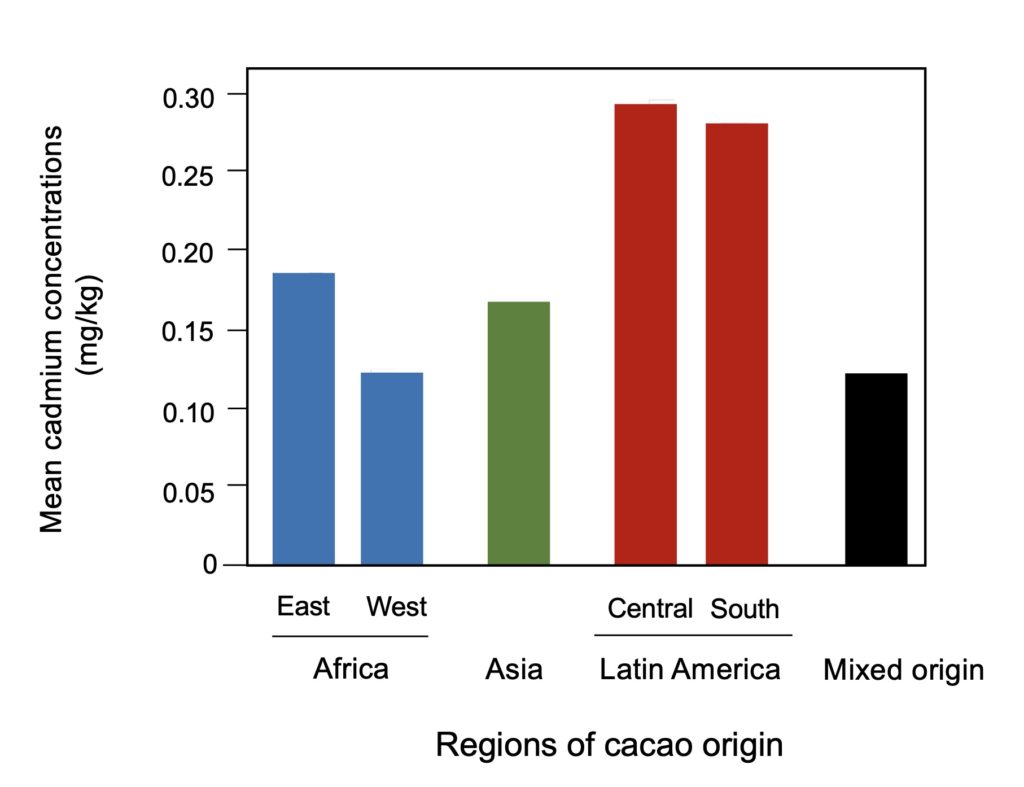
The cadmium concentration is generally directly correlated with the percentage of cacao present in the chocolate product and remains below the permitted limit for the vast majority (154/155) of the products analyzed in the study (Figure 5), with the notable exception of one product containing 100% cacao from Colombia. It is therefore clear that the vast majority of chocolate products available for consumption contain non-toxic amounts of cadmium and are perfectly safe. Only certain products, from plantations located in areas with high levels of cadmium, may exceed these limits.
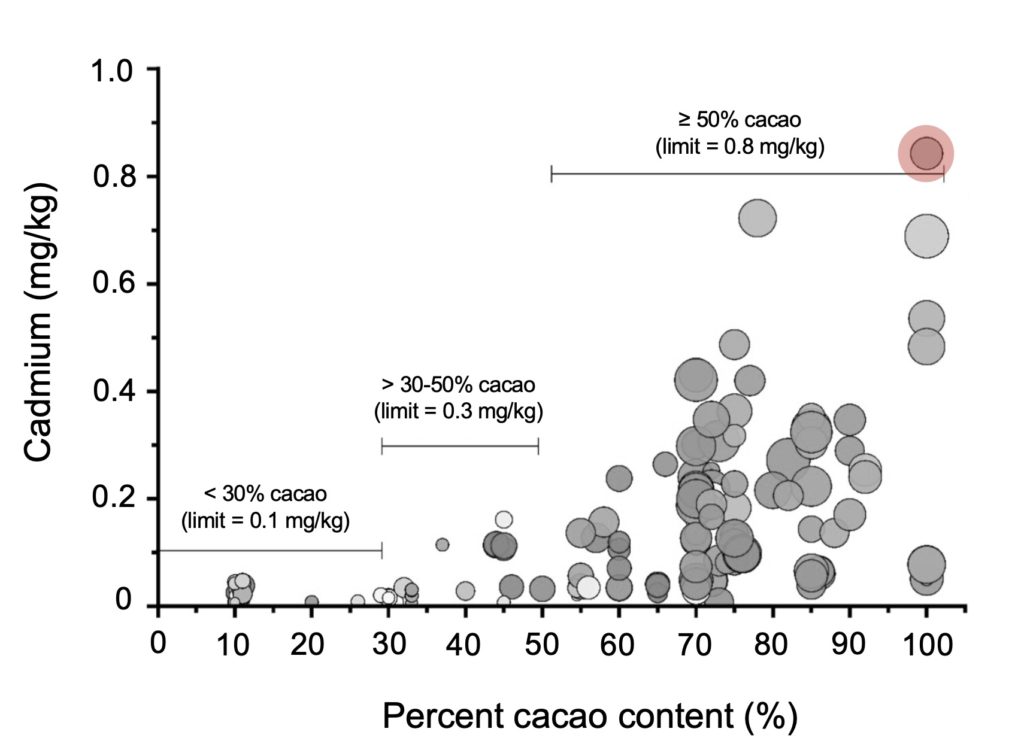
Overall, these results are very reassuring and certainly do not justify the alarmist conclusions of two analyses conducted in 2022 and 2023 by the magazine Consumer Reports. These analyses revealed that several chocolate products should be considered potentially dangerous because they contain cadmium levels exceeding the California limit of 0.0041 mg (or 4.1 µg) of cadmium per day (a comprehensive list of products containing cadmium levels below or above this 4.1 µg limit can be found here). This conclusion was, however, somewhat premature, given that this very conservative limit (arbitrarily set at 1/1000 of the smallest dose with no toxicity) is much lower than that used by the WHO, the US FDA, the European Union, and even… California! (see the legend for Table 1). When these limits are used as the criterion, the data obtained clearly show that the vast majority of products are perfectly safe, regardless of their cacao content (Figure 5). According to the calculations made by the study authors, only children weighing less than 24 kg (approximately 6 years old for most people) who consumed chocolate products with the highest cadmium levels on a daily basis could theoretically be at risk of exposure to toxic amounts of the heavy metal.
Dietary cadmium
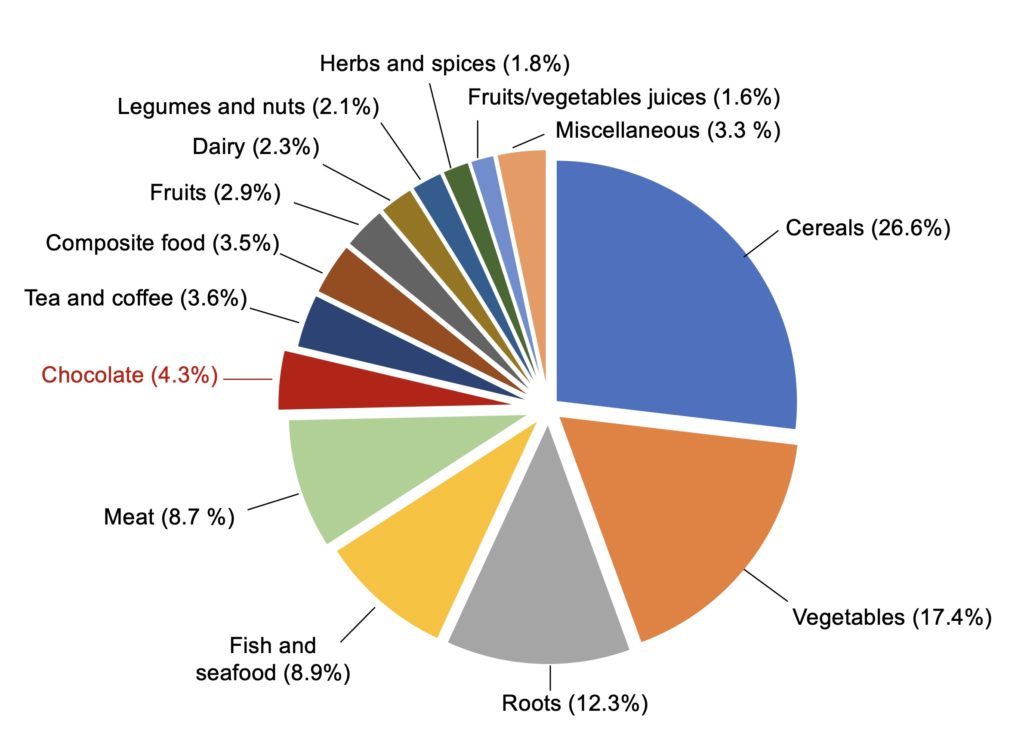
Another factor that puts the presence of cadmium in chocolate into perspective is that several plants other than the cacao tree accumulate cadmium and thus contribute to the population’s exposure to this metal. This is particularly true for smokers, who have blood cadmium levels twice as high as non-smokers (the tobacco plant is an excellent cadmium accumulator). In non-smokers, 90% of cadmium comes from food, especially grains and vegetables (particularly leafy greens), which alone account for about a third of cadmium exposure, almost 10 times more than that from chocolate (Figure 6). This is because, even though they contain cadmium concentrations at least three times lower than those of cacao (0.038 vs. 0.130 mg/kg), these foods are consumed in much larger quantities and therefore contribute far more to daily cadmium intake than chocolate (Figure 6). In other words, you probably ingest more cadmium from the staple foods you eat every day, such as cereals, leafy green vegetables, potatoes, and legumes, than from your daily consumption of dark chocolate.
In short, the cadmium in dark chocolate poses no health risk to the vast majority of people who consume it regularly in moderate amounts (1–2 portions of 30 g per day), especially if the cacao used in its production comes from the African continent.